Top Land Scams in Nigeria and How to Avoid Them
Every year, Nigerian land buyers lose real money, sometimes life savings, to scams that follow the same handful of patterns. Knowing what those patterns look like is the single most effective protection you have, more effective than luck, and more effective than "just trusting" whoever sold you the land. Here's what to actually watch for.
1. Fake or Forged Title Documents
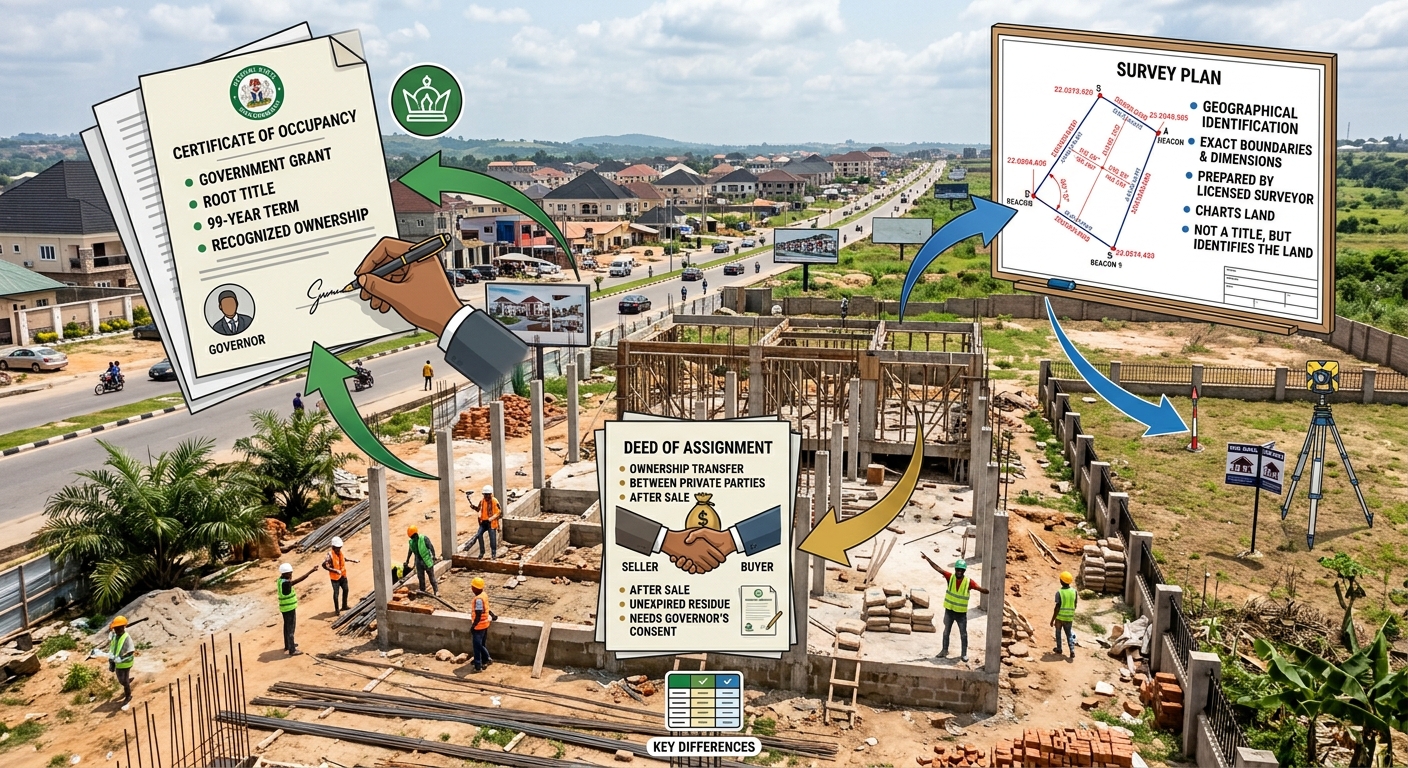
Scammers produce counterfeit Certificates of Occupancy, forged Deeds of Assignment, and fabricated survey plans that look convincing at a glance. On the surface, everything checks out, until you take it to the actual land registry and discover the names, dates, or formatting don't match official records.
Protection: Never accept a title document at face value. Verify it independently through the relevant state land registry or geographic information system (AGIS in Abuja, e-GIS in Lagos, and the equivalent bodies in other states), not through the seller's own "verification" process.
2. Omo Onile Extortion and Family Land Disputes
In Lagos and several other states, land-owning families (referred to as omo-onile) sometimes sell land they no longer have full legal authority over, or land where multiple family branches each believe they have the right to sell. Buyers can pay in good faith, only to have a different family member show up later demanding additional payment or disputing the sale entirely.
Protection: Ask specifically about the land's root of title and whether it has a documented excision or gazette, government-issued titles consistently hold up better in Nigerian courts than customary family claims when disputes arise.
3. Duplicate or Multiple Sales
In estates with poor internal record-keeping, or where a seller is deliberately dishonest, the same plot can be sold to more than one buyer. Everyone has documents. Only one of them can actually build.
Protection: Request the estate's official layout or allocation plan and confirm your specific plot number is recorded against your name, not just described verbally.
4. Fake Listings and Ghost Land
Some scammers advertise attractive plots, sometimes for land that doesn't exist at all, using low prices to pressure a fast decision. Once payment is made to "secure" the plot, the scammer disappears.
Protection: Insist on visiting the actual site in person, or requesting a live video walkthrough if you're buying remotely, not just photos or flyers. Never pay to "reserve" land you haven't verified is real.
5. Government Acquisition Land Sold as Clean Title
Some land falls under government acquisition, meaning the government has claimed rights over it for future use. This land can sometimes be regularized, but it carries genuine risk if the acquisition is active or "committed." Sellers sometimes leave this detail out entirely.
Protection: Ask directly whether the land is under any form of government acquisition, and get that answer in writing, not just verbally.
6. Pressure to Pay Before You Can Verify
Across almost every scam pattern, one warning sign shows up consistently: pressure to pay quickly, before you've had time to complete a registry search or independent verification, often paired with excuses for why you "can't" verify directly with the land authority.
Protection: Treat urgency as a red flag, not a reason to move faster. A legitimate seller with genuine title has no reason to discourage you from verifying it.
What Real Verification Actually Looks Like
- Get the exact title document type in writing (see our breakdown of C of O vs Deed of Assignment vs Survey if you're unsure what you're being offered).
- Conduct an independent land registry search through the relevant state authority, not through the seller.
- Trace the root of title with a solicitor, especially for family or customary land.
- Visit the site in person or request a verified video walkthrough.
- Confirm the seller or company's track record, how long have they been operating, and can you find real, verifiable client history?
Frequently Asked Questions
What is the most common land scam in Nigeria? Fake or forged title documents and omo-onile family land disputes are among the most frequently reported patterns. Both typically involve documentation that looks convincing until it's checked against official land registry records.
How can I verify land title before buying? Conduct an independent search through the relevant state land registry or geographic information system (such as AGIS in Abuja or e-GIS in Lagos), rather than relying on documents or "verification" provided by the seller alone.
What does it mean if a seller pressures me to pay quickly? It's one of the clearest warning signs across almost every scam pattern. A legitimate seller with genuine, verifiable title has no reason to discourage you from taking time to verify before paying.
Can omo-onile claim land I've already legally purchased? It can happen, particularly with customary or family land lacking a documented excision or gazette. Government-issued titles like a C of O generally hold up more reliably in Nigerian courts than undocumented customary claims.
Is it safe to buy land in Nigeria while living abroad? It can be, but diaspora buyers are frequently targeted specifically because they can't easily visit in person. Insist on a live video walkthrough, independent title verification, and work only with sellers who have a documented, verifiable track record.
The Bottom Line
Land scams in Nigeria follow patterns, not random bad luck. Fake documents, family land disputes, duplicate sales, and pressure tactics account for the overwhelming majority of cases. Every one of them is preventable with the same basic discipline: verify independently, never let urgency override due diligence, and only work with sellers who welcome scrutiny rather than resisting it.
Looking for verified, titled land with a documented track record? Browse our current properties, or book a free consultation to walk through title verification for any plot you're considering.
This article covers general safety information about land fraud and is not legal advice. For a specific transaction, always consult a qualified solicitor.