
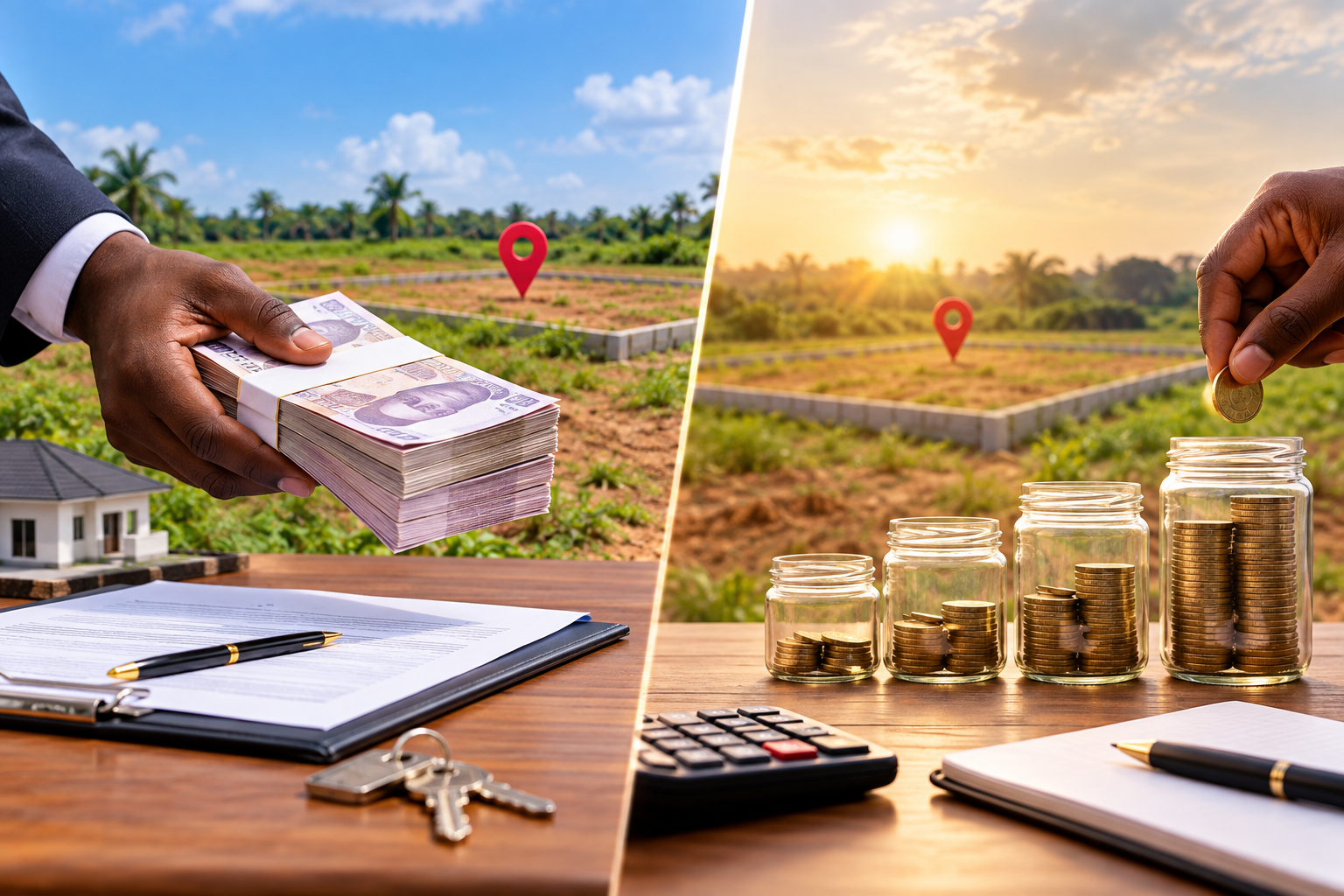
Cash vs Installment: The Real Cost of Buying Land
Paying cash feels like the "serious" way to buy land, no debt, no schedule, no risk of missing a payment. But is it actually the smarter financial choice? Here's an honest comparison of what each path actually costs you, not just in naira, but in time and opportunity.
The Obvious Comparison: Price
In most cases, the sticker price of land is the same whether you pay cash or use a payment plan, some sellers may apply a small premium for extended installment terms, but the core price of the asset typically doesn't change based on how you pay for it. So the real comparison isn't about price, it's about time and what else your money is doing while you save.
What Cash Actually Costs You: Time
Paying cash means saving the full price before you own anything. Take a ₦3,500,000 plot as an example. At a disciplined 30% savings rate:
| Monthly Salary | Time to Save ₦3,500,000 in Cash |
|---|---|
| ₦150,000 | 6.5 years |
| ₦250,000 | 3.9 years |
| ₦350,000 | 2.8 years |
During every one of those years, that ₦3,500,000 plot is not appreciating for you, because you don't own it yet. If land in that location rises even modestly each year, waiting means the plot is likely to cost more by the time you've saved enough, a moving target funded by a shrinking real value of naira.
What an Installment Plan Actually Costs You: Monthly Commitment
Spread the same ₦3,500,000 plot over 12 months, and it's roughly ₦291,700 a month. Over 18 months, closer to ₦194,400 a month. That's a meaningfully different kind of commitment: instead of years of saving before ownership, you're often allocated the plot early in the process, sometimes at the deposit stage, and you own an appreciating asset while you finish paying for it.
We've broken down exactly how these plans work, including what happens if a payment is missed, in how land payment plans actually work in Nigeria.
The Opportunity Cost Most People Miss
Here's the part that rarely gets discussed: while you're saving cash for years, that money typically sits in some kind of account, and Nigerian savings accounts pay very little, standard bank savings sit around 1.5%-4% annually, while even high-yield options mostly still lag Nigeria's inflation rate (around 15.7% as of April 2026). That means your saved cash is quietly losing real value every month you hold it, even as you get closer to your target.
Compare that to a payment plan: you're paying down an asset that, historically, land in good locations has tended to hold or increase in value, rather than sitting in an account that's guaranteed to lose ground against inflation.
When Cash Actually Makes More Sense
This isn't a blanket case against saving cash, there are real situations where it's the better choice:
- You already have the full amount available and aren't trying to accumulate it over years, there's little reason to spread payments if the money is already sitting there.
- You want to avoid any risk of a missed payment or reallocation clause, some buyers simply prefer the certainty of a completed transaction over a multi-month commitment.
- You're buying land you plan to develop or resell immediately, where full ownership and title completion on day one matters more than monthly cash flow.
When a Payment Plan Makes More Sense
- You're earning a salary in the ₦150,000-₦350,000 range and the full price would take years to save, see our detailed breakdown in what land can you buy on a ₦150k-₦350k salary.
- You want to own or hold the asset sooner, rather than waiting years while land prices in your target location continue to move.
- You can comfortably sustain a fixed monthly commitment without it straining your other financial obligations.
The Bottom Line
Cash feels safer, but it usually isn't cheaper, it just moves the cost from "a monthly payment" to "years of waiting while inflation erodes your savings and land prices rise." For most buyers on a normal Nigerian salary, a well-structured payment plan reaches ownership faster and with less real financial erosion than pure cash saving. The right choice still depends on your specific situation, but it's worth running the actual numbers rather than assuming cash is automatically the more responsible path.
Want to compare cash and payment plan options for a specific plot? Browse verified properties, or book a free consultation to run the numbers for your budget.
Frequently Asked Questions
Is it cheaper to pay for land in cash than on a payment plan? Usually not significantly, the base price is typically the same either way, though some sellers apply a small premium for extended terms. The bigger cost difference is the years of waiting and inflation erosion involved in saving cash first.
Does saving cash for land actually lose value over time? Yes, in real terms. Standard Nigerian savings accounts pay around 1.5%-4% annually, while inflation has run well above that, meaning cash sitting in a typical account loses purchasing power every year you hold it before buying.
When does it make sense to pay cash for land instead of using a payment plan? When you already have the full amount available without years of saving required, or when you want the certainty of full ownership immediately without any ongoing payment obligations.
Do I own the land while I'm still paying on an installment plan? This depends on the seller's specific terms, in many structures the plot is reserved or effectively allocated to you once a deposit is made, with full title issued at completion. Always confirm this specifically before signing.
What's the real advantage of a payment plan besides smaller payments? It typically gets you closer to actual ownership sooner, rather than years of saving with nothing to show for it until the full price is accumulated, while your money would otherwise be losing value to inflation in a low-yield account.